
Ayahuasca: Was es ist, Wirkung, Risiken und wie eine Zeremonie abläuft
Das Gebräu beeinflusst das Bewusstsein und kann intensive psychologische, emotionale und körperliche Erfahrungen hervorrufen. Seine Wirkungen können jedoch nicht von dem Rahmen, der Gesundheit einer Person, ihrer Vorbereitung und der Erfahrung der die Zeremonie leitenden Personen getrennt werden. Ayahuasca ist nicht für jeden geeignet, und allein sein natürlicher Ursprung bedeutet nicht, dass seine Anwendung frei von Risiken ist.
Dieser Leitfaden erklärt, was Ayahuasca ist und woraus es hergestellt wird, wie eine traditionelle Zeremonie abläuft, welche Wirkungen und Risiken sie haben kann, wie man sich darauf vorbereitet und woran man verantwortungsvolle Begleitung erkennt. Er vereint eine traditionelle amazonische Perspektive, langjährige praktische Erfahrung und aktuelles Fachwissen, ohne eine schnelle oder garantierte Heilung zu versprechen.
Diese Seite richtet sich an internationale Leser, einschließlich Besucher aus den Vereinigten Staaten. Gesetze, medizinische Praktiken und Reisebestimmungen variieren von Land zu Land. Überprüfen Sie daher stets die Regeln, die an Ihrem Wohn-, Reise- und Transitort gelten.
Geschrieben von Jan Rostlinka, Gründer von Feather Crown und Retreat-Organisator · Zuletzt geprüft: 6. September 2026. Jan lebt seit 2008 im ecuadorianischen Amazonasgebiet und arbeitet mit indigenen Heilern der Kichwa und Shipibo zusammen. Die Abschnitte zu Gesundheit und Pharmakologie basieren auf den unten aufgeführten professionellen Quellen; die Teilnahmebedingungen für die Feather Crown sind als unsere eigene Retreat-Richtlinie klar gekennzeichnet.
Inhalt dieses Handbuchs
- Was ist Ayahuasca?
- Der Ursprung und die Geschichte von Ayahuasca
- Wie eine Ayahuasca-Zeremonie abläuft
- Ayahuasca-Erfahrungen variieren stark
- Die Wirkung von Ayahuasca und warum Sicherheit nicht unterschätzt werden darf
- Wie man sich auf Ayahuasca vorbereitet
- Legalität von Ayahuasca in den Vereinigten Staaten und anderen Ländern
- Die häufigsten Mythen über Ayahuasca
- Die Bedeutung authentischer Tradition
- Ayahuasca als Weg, nicht als Sensation
- Fachliteratur und weiterführende Literatur
- Weitere Artikel über Ayahuasca
- Häufig gestellte Fragen zu Ayahuasca
Ayahuasca auf den Punkt gebracht
- ein traditioneller amazonischer Sud und gleichzeitig der Name der Liane Banisteriopsis caapi
- eine gängige Form des Suds kombiniert die Liane mit einer DMT-haltigen Pflanze, am häufigsten Psychotria viridis oder Diplopterys cabrerana
- Die Wirkung ist individuell, und die Hauptphase der psychoaktiven Wirkung dauert in der Regel mehrere Stunden.
- Ayahuasca ist nicht für jeden geeignet und kann bei bestimmten gesundheitlichen Problemen oder in Kombination mit bestimmten Medikamenten riskant sein.
- in einem traditionellen amazonischen Kontext ist es Teil eines breiteren rituellen, heilerischen und kulturellen Rahmens
Was ist Ayahuasca?
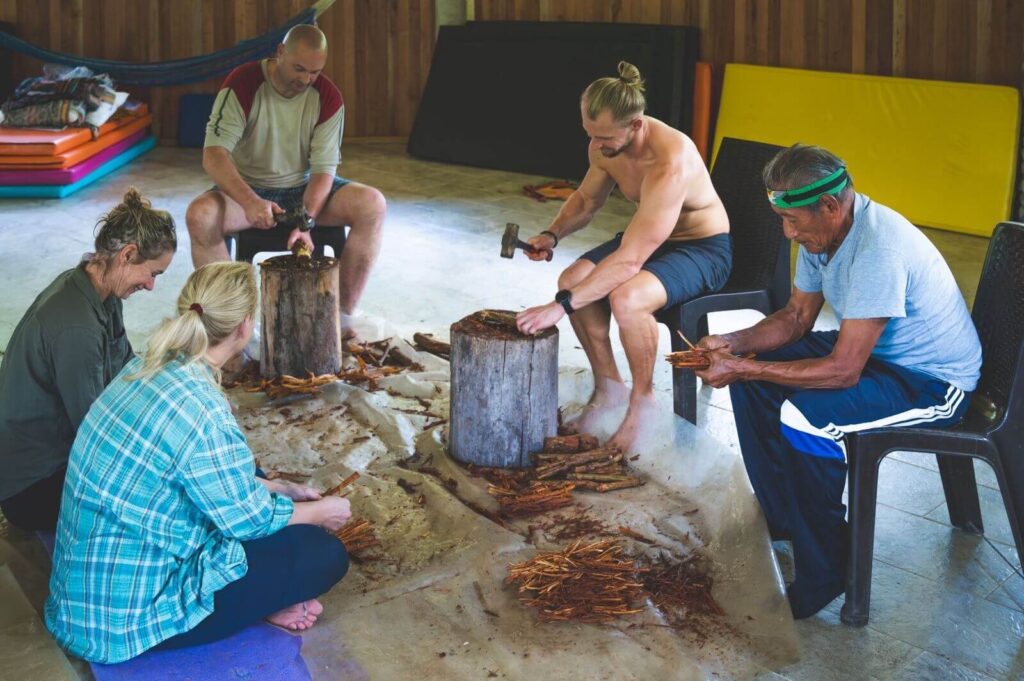
Retreat-Teilnehmer bereiten Ayahuasca mit dem Kichwa-Heiler Don Carlos zu.
Ayahuasca ist ein traditioneller Pflanzentrank aus dem Amazonasgebiet. Er wird meist aus der Liane zubereitet Banisteriopsis caapi und anderen Pflanzen, je nach der jeweiligen Tradition und der Arbeitsweise eines einzelnen Heilers. Es wird in verschiedenen Regionen Südamerikas unterschiedlich angewendet – die Art und Weise, wie die Zeremonie geleitet wird, der Heilungsansatz und der Gesamtzusammenhang variieren.
Aus pharmakologischer Sicht kombiniert eine häufige Form von Ayahuasca die Liane Banisteriopsis caapi, das Beta-Carboline mit einer reversiblen Hemmwirkung auf MAO-A enthält, mit DMT-haltigen Pflanzen, am häufigsten Psychotria viridis oder Diplopterys cabrerana. Es ist genau die Hemmung von MAO-A, die es DMT ermöglicht, bei der Einnahme aktiv zu werden. Professionelle Quellen sind unten aufgeführt.
Für manche Menschen ist Ayahuasca in erster Linie eine spirituelle Erfahrung; für andere ist es ein tiefgreifender psychologischer Prozess, eine Reinigung oder ein Werkzeug zur Selbsterkenntnis. Es ist jedoch keine Attraktion oder eine universelle Lösung für alles. Viel hängt von der Bereitschaft der Person, der Qualität der Begleitung und dem Rahmen ab, in dem die Zeremonie stattfindet.
Der Ursprung und die Geschichte von Ayahuasca
Die genauen Anfänge der Verwendung von Ayahuasca lassen sich nicht zuverlässig datieren. Seine Nutzung ist jedoch tief in den indigenen Traditionen der Amazonas-Region verwurzelt, und westliche botanische Beschreibungen der Liane Banisteriopsis caapi auf das neunzehnte Jahrhundert zurückgehen, als der britische Botaniker Richard Spruce sie während seiner Reisen durch den Amazonas beschrieb.
Heute umfasst der Begriff “Ayahuasca” verschiedene lokale Traditionen, Rezepte und Arbeitsweisen. Es ist daher ungenau, es lediglich als eine einzige, chemisch standardisierte Substanz zu verstehen. Der kulturelle Kontext, die Kombination der verwendeten Pflanzen und die Art und Weise, wie die Zeremonie geleitet wird, unterscheiden sich in den verschiedenen Regionen des Amazonasgebiets.
Wie eine Ayahuasca-Zeremonie abläuft
Der Ablauf einer Ayahuasca-Ceremonie kann je nach Land, Tradition und individuellem Heiler stark variieren. In einem authentischen indigenen Kontext geht es nicht einfach darum, einen Sud zu trinken, sondern um einen gesamten Heilungs- und spirituellen Rahmen, der die Vorbereitung, die während der Zeremonie geleistete Arbeit und die anschließende Integration umfasst.
Eine typische Zeremonie findet nachts statt, oft in Stille oder begleitet von traditionellen Heilungsliedern. Die Teilnehmer durchlaufen ihren eigenen Prozess, der physisch und psychisch intensiv sein kann. Dieser kann Reinigung, starke Emotionen, Einsichten, die Konfrontation mit Aspekten des eigenen Lebens und ein tiefes Gefühl der Verbundenheit umfassen.
Wenn Sie im Detail erfahren möchten, wie eine Zeremonie bei uns abläuft – von der Vorbereitung und der Arbeit des indigenen Heilers bis hin zur individuellen Reinigung und Integration –, lesen Sie unsere Seite über die Ablauf einer Ayahuasca-Zeremonie.
Möchten Sie sehen, wie eine verantwortungsvoll geführte Erfahrung in der Praxis aussieht?
Erkunden Sie die Feather Crown Ayahuasca Retreat Ecuador Übersicht oder sehen Sie unsere 10-tägiges Retreat-Programm, einschließlich der Einrichtungen und der Art und Weise, wie unsere Zeremonien durchgeführt werden.
Ayahuasca-Erfahrungen variieren stark
Eine Erfahrung mit Ayahuasca ist nicht für jeden gleich. Die eine Person erlebt vielleicht eine kraftvolle emotionale Befreiung, eine andere begegnet lange unterdrückten Themen, während wiederum eine andere tiefe Ruhe, Klarheit oder eine spirituelle Dimension spürt. Für manche Menschen verläuft der Prozess sanfter, für andere ist er sehr intensiv.
Genau deshalb ist es wichtig, keinen einfachen Versprechungen wie “Ayahuasca wird dein Leben an einem Wochenende verändern” zu glauben. Es kann manchmal von großem Nutzen sein, aber für uns war die darauffolgende Integration der Ayahuasca-Erfahrung und die Fähigkeit, das, was ein Mensch erlebt hat, wirklich in den Alltag zu bringen, sind genauso wichtig wie die Zeremonie selbst.
Die Wirkung von Ayahuasca und warum Sicherheit nicht unterschätzt werden darf
Ayahuasca kann starke psychische und physische Wirkungen haben. Neben einem veränderten Bewusstseinszustand kann sie intensive Emotionen, körperliche Reinigung, Erschöpfung, Erbrechen, Durchfall oder das Auflösen sensibler Themen hervorrufen. Genau aus diesem Grund ist sie nicht für jeden geeignet und ihre Anwendung erfordert einen verantwortungsvollen Umgang.
Die Gesundheit einer teilnehmenden Person, die von ihr eingenommenen Medikamente, ihre psychologische Vorgeschichte und die Qualität der Begleitung sind von entscheidender Bedeutung. Sicherheit ist kein optionales Extra, sondern das Fundament. Eine intensive Erfahrung allein reicht nicht aus. Es ist wichtig, dass sich eine Person in einem Rahmen befindet, in dem die Arbeit verantwortungsvoll, ethisch und mit Respekt vor den Grenzen der Teilnehmenden durchgeführt wird.
Mehr zu diesem Thema finden Sie in unserem Gesundheits-, Medikamenten- und Sicherheitsanforderungen.
Wie man sich auf Ayahuasca vorbereitet
Die folgenden Regeln und Empfehlungen gelten speziell für die Teilnehmer unseres Feather Crown Retreats; sie sind kein universeller Leitfaden für die Arbeit mit Ayahuasca außerhalb unseres Programms.
- Berichten Sie uns wahrheitsgemäß über alle körperlichen und psychischen Beschwerden, Medikamente, Nahrungsergänzungsmittel, pflanzlichen Heilmittel, Allergien und den jüngsten Konsum psychoaktiver Substanzen. Informieren Sie uns vor Ihrer Ankunft über jede spätere Änderung.
- 14 Tage vor dem Retreat dürfen Sie ohne unsere vorherige schriftliche Genehmigung keine Medikamente, Nahrungsergänzungsmittel, pflanzliche Heilmittel, Alkohol, Drogen oder andere Substanzen einnehmen. Einige Medikamente sind mit Ayahuasca unverträglich und müssen gegebenenfalls früher abgesetzt werden. Wenn eine Reduzierung oder das Absetzen verschriebener Medikamente für eine sichere Teilnahme erforderlich ist, handelt es sich dabei um eine Teilnahmebedingung und nicht um eine Behandlungsanweisung. Sie entscheiden selbst, ob Sie diese Änderung vornehmen und teilnehmen möchten. Bevor Sie Ihre verschriebenen Medikamente ändern, empfehlen wir Ihnen, sich zunächst von Ihrem behandelnden Arzt über die Risiken und eine sichere Vorgehensweise zu informieren. Sollten Sie sich für die Änderung entscheiden, teilen Sie uns bitte mit, welche Medikamente Sie geändert haben und wann Sie die letzte Dosis eingenommen haben, damit wir das erforderliche Intervall und Ihre Eignung prüfen können. Antidepressiva und andere Medikamente, die die Psyche beeinflussen, dürfen nicht mit Ayahuasca kombiniert werden; die notwendige Auswaschphase hängt vom jeweiligen Medikament und dessen Anwendung ab.
Falls Sie einer Empfehlung nicht folgen konnten oder sich Ihr physischer oder psychischer Zustand verändert hat, informieren Sie uns bitte im Voraus, damit wir die Sicherheit bewerten und unsere Arbeit entsprechend anpassen können.
Legalität von Ayahuasca in den Vereinigten Staaten und anderen Ländern
Der rechtliche Status von Ayahuasca variiert von Land zu Land und kann von der Zusammensetzung des Gebrus, dem Verwendungszweck und dem spezifischen rechtlichen Kontext abhängen. In den Vereinigten Staaten ist DMT auf Bundesebene als eine kontrollierte Substanz der Liste I eingestuft. In bestimmten Fällen wurden begrenzte Ausnahmen für die religiöse Nutzung anerkannt, diese machen jedoch den Eigenbesitz, die Zubereitung, die Einfuhr oder den Konsum nicht generell legal. Die Richtlinien der Bundesstaaten und Kommunen können sich unterscheiden und ändern nicht notwendigerweise das Bundesrecht.
Internationale Besucher sollten niemals davon ausgehen, dass Ayahuasca über eine Grenze oder durch ein Transitland transportiert werden darf. Informieren Sie sich über die aktuellen Gesetze Ihres Heimatlandes, Ihres Reiseziels und jedes Landes, durch das Sie reisen. Dies sind lediglich allgemeine Informationen und keine Rechtsberatung.
Die häufigsten Mythen über Ayahuasca
Mythos: Eine Zeremonie löst jedes Problem
Ayahuasca kann wichtige Themen ansprechen oder eine neue Perspektive eröffnen, aber sie wird das Leben eines Menschen nicht von sich aus verändern. Ein langfristiger Nutzen hängt zudem von der anschließenden Integration, alltäglichen Entscheidungen und manchmal auch von professioneller Unterstützung ab.
Mythos: Je stärker die Dosis, desto besser das Ergebnis
Die Intensität einer Erfahrung ist kein Maß für die Qualität oder Tiefe der Arbeit. Eine geringere Dosis oder die Teilnahme ohne Konsum kann für manche Menschen geeigneter sein. Sicherheit, das richtige Timing und die Fähigkeit, die Erfahrung zu verarbeiten, sind wichtiger als ihre Intensität.
Mythos: Dass etwas natürlich ist, bedeutet nicht, dass Ayahuasca immer sicher ist
Natürliche Substanzen können starke Wirkungen haben und mit den Medikamenten oder dem Gesundheitszustand einer Person wechselwirken. Ein verantwortungsvoller Ansatz umfasst daher ein Gesundheitsscreening, die wahrheitsgemäße Offenlegung aller Medikamente und die Beachtung von Kontraindikationen.
Mythos: Jeder, der mehrmals Ayahuasca getrunken hat, kann eine Zeremonie leiten
Persönliche Trinkerfahrung ist nicht dasselbe wie langjähriges Training, Kenntnis traditioneller Praktiken und die Fähigkeit, sicher mit Menschen in herausfordernden Zuständen zu arbeiten. Bei der Auswahl eines Ortes ist es daher essenziell, die Erfahrung sowohl des Heilers als auch des Unterstützungsteams zu überprüfen.
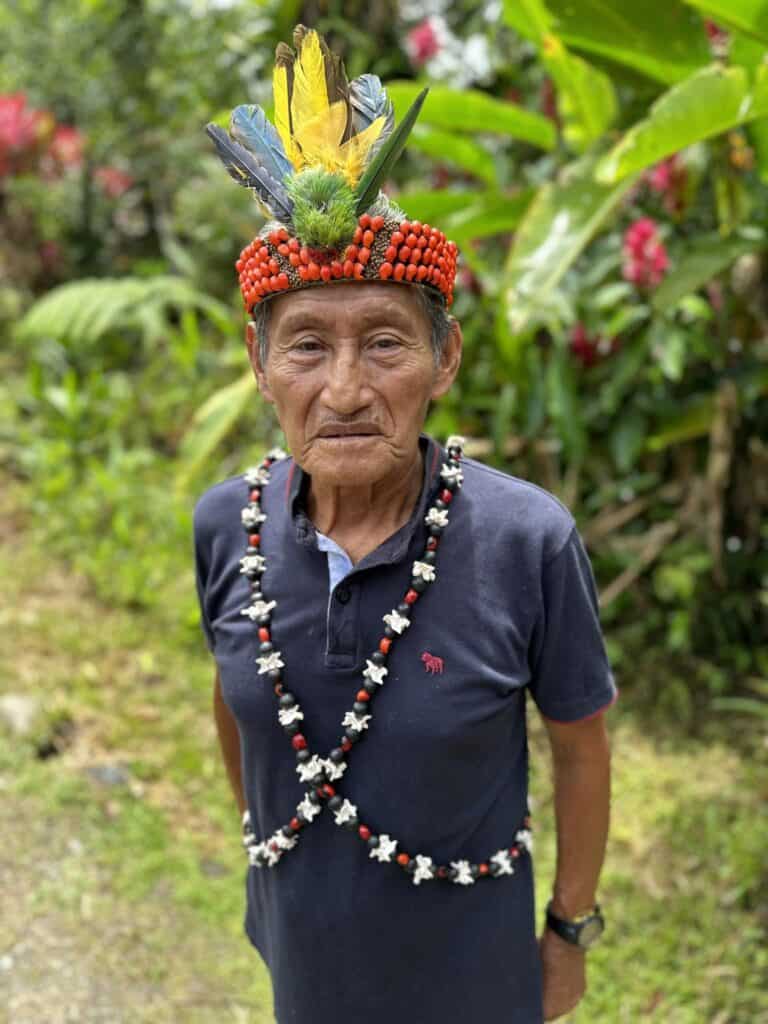
Don Carlos, ein Kichwa-Schamane, der Ayahuasca-Zeremonien leitet
Die Bedeutung authentischer Tradition
Im Amazonasgebiet wird Ayahuasca nicht einfach nur als psychoaktiver Sud verstanden. Indigene Völker arbeiten seit vielen Generationen damit und haben einen gesamten Heilungs- und Ritualrahmen darum herum geschaffen: Wissen über die Pflanzen und die Zubereitung der Medizin, Dosierungsauswahl, Heilungslieder, Reinigungen, Regeln für die Durchführung einer Zeremonie und die Betreuung einer Person während des Prozesses. Im übertragenen Sinne kann Ayahuasca als eine Technologie verstanden werden, die einzelne amazonische Traditionen über Generationen hinweg beobachten, testen und schrittweise verfeinern konnten.
Diese generationsübergreifende Erfahrung ist von außerordentlichem Wert, aber eine indigene Herkunft allein garantiert keine Sicherheit. Die persönliche Integrität des Heilers, ein ethischer Ansatz, Gesundheitsuntersuchungen, die Achtung der Grenzen der Teilnehmer, genügend nüchterne Assistenten und die Fähigkeit, auf die Bedürfnisse eines modernen Menschen einzugehen, sind gleichermaßen wichtig.
Wir halten daher die effektivste Herangehensweise für eine Kombination aus einem erfahrenen indigener Schamanen und westlichen Begleitern. Der Schamane hält den traditionellen Heilungsrahmen und leitet die Arbeit mit der Medizin; die Begleiter sorgen für ethische Regeln, klare Kommunikation, Vorbereitung, Sicherheitsprotokolle, praktische Unterstützung und die anschließende Integration. Das Zusammenbringen dieser beiden Welten hilft dabei, einen Rahmen zu schaffen, der die ursprüngliche Tradition respektiert und gleichzeitig für einen modernen westlichen Menschen funktioniert.
Unsere Zeremonien werden von erfahrenen indigenen Heilern geleitet, deren Arbeit durch viele positive Teilnehmerbewertungen bestätigt wird. Mehr über sie und die Rolle des gesamten Support-Teams erfahren Sie auf unserer Unser Team Seite.
Mit dem wachsenden Interesse an Ayahuasca steigt auch die Zahl der Orte, die es anbieten. Die alleinige Verwendung traditioneller Namen, Kleidung oder Musik ist kein Garant für eine qualitativ hochwertige Begleitung. Wichtiger sind die echte Erfahrung des Heilers, Sicherheitsprotokolle, die Herkunft der Medizin, die Gruppengröße sowie die Betreuung vor und nach der Zeremonie.
| Bereich | Verantwortungsvoll geführte traditionelle Arbeit | Warnsignale eines übermäßig kommerziellen Ansatzes |
|---|---|---|
| Führung | Ein erfahrener Heiler mit langjähriger Praxis und klarer Verantwortung | Unklare Schulung oder Anleitung, die nur auf wenigen persönlichen Erfahrungen beruht |
| Sicherheit | Gesundheitsuntersuchung, Beachtung von Kontraindikationen und ein nüchternes Unterstützungsteam | Herabspielen von Risiken, Medikamenten sowie der psychischen oder körperlichen Gesundheit einer Person |
| Gruppe | Die Anzahl der Teilnehmer entspricht der Kapazität des Heilers und der Assistenten. | Große Gruppen ohne genügende individuelle Betreuung |
| Vorbereitung und Integration | Klare Vorab-Anweisungen und Raum, um die Erfahrung nach der Zeremonie zu verarbeiten | Konzentration nur auf das kraftvolle Erlebnis selbst, ohne anschließende Unterstützung |
| Kommunikation | Realistische Erwartungen, Offenheit und keine Heilungsversprechen | Versprechungen einer raschen Transformation oder einer Universallösung für Probleme |
Bei der Auswahl eines Ortes sollten Sie fragen, wer die Zeremonie leitet, wie lange diese Person diese Arbeit bereits ausübt, ob eine Gesundheitsuntersuchung stattfindet, wie viele nüchterne Assistenten anwesend sind und wie mit möglichen Komplikationen umgegangen wird. Überprüfbare Erfahrungen von Teilnehmern und der Respekt vor der Option, die Medizin nicht zu trinken, sind ebenfalls wichtig.
Ayahuasca als Weg, nicht als Sensation
Ayahuasca kann eine außerordentlich kraftvolle und wohltuende Erfahrung sein, aber sie ist am bedeutungsvollsten, wenn sie in einen ehrlichen Rahmen, hochwertige Begleitung und eine sichere Umgebung eingebettet ist.
Wenn Sie mehr über eine bestimmte Option erfahren möchten, erkunden Sie unsere 10-tägiges Ayahuasca-Retreat in Ecuador oder die aktuelle ansehen Ayahuasca-Retreat-Daten.
Fachliteratur und weiterführende Literatur
Diese Seite verbindet eine traditionelle amazonische Perspektive mit den Erkenntnissen moderner Forschung. Zu Pharmakologie, Sicherheit und dem aktuellen Forschungsstand empfehlen wir insbesondere die folgenden Fachübersichten:
- Ayahuasca- und Dimethyltryptamin-Analyse unerwünschter Ereignisse und Toxizität (2024) – eine systematische thematische Übersichtsarbeit zu unerwünschten Ereignissen, Sicherheit und Toxizität.
- Vorläufige Auswirkungen von Ayahuasca auf die psychische und physische Gesundheit (2026) – eine systematische Übersichtsarbeit prospektiver Studien und langfristiger Ergebnisse.
- Ayahuasca: Pharmakologie, Sicherheit und therapeutische Wirkungen – ein Überblick über Pharmakologie, Sicherheit und Forschung.
- Die pharmakologische Wechselwirkung von Verbindungen in Ayahuasca: eine systematische Übersichtsarbeit – eine systematische Übersichtsarbeit zu Wechselwirkungen zwischen DMT und Betacarbolinen.
- Ayahuasca: Psychologische und physiologische Wirkungen, Pharmakologie und mögliche Anwendungen – eine Übersicht über psychologische und physiologische Wirkungen.
- Ayahuasca: Eine Übersicht über historische, pharmakologische und therapeutische Aspekte – Geschichte, Pharmakologie und Forschungskontext.
- Neurobiologische Forschung zu DMT und dessen Potenzierung durch MAO-Hemmung – eine aktuelle Übersicht über den Mechanismus von DMT und MAO-Hemmung.
- Klinische Untersuchungen zum therapeutischen Potenzial von Ayahuasca – ein klassischer professioneller Überblick über Pharmakologie und klinische Forschung.
- US-Drogenbekämpfungsbehörde (DEA): Einstufung von Betäubungsmitteln – Amtliche Hintergrundinformationen zu den bundesstaatlichen Betäubungsmittel-Klassen.
Hinweis: Die Forschung zu möglichen therapeutischen Wirkungen läuft noch, und Ayahuasca ist kein Ersatz für eine standardmäßige medizinische oder psychologische Behandlung.
Weitere Artikel über Ayahuasca
Häufig gestellte Fragen zu Ayahuasca
Was ist Ayahuasca und was enthält es?
Ayahuasca ist ein traditioneller amazonischer Sud, der aus der Liane zubereitet wird Banisteriopsis caapi und andere Pflanzen. Es enthält natürliche Substanzen, die das Bewusstsein beeinflussen, und wird im Rahmen von Zeremonien verwendet, die von erfahrenen Heilern geleitet werden.
Welche Wirkungen hat Ayahuasca?
Zu den Wirkungen von Ayahuasca gehören ein veränderter Bewusstseinszustand, starke Emotionen, Introspektion, körperliche Reinigung und tiefgreifende innere Erfahrungen. Jeder Mensch erlebt es anders, abhängig von der Umgebung, der Anleitung und der eigenen Bereitschaft.
Wie lange dauert eine Ayahuasca-Zeremonie?
Eine Ayahuasca-Zeremonie dauert in der Regel mehrere Stunden, oft vom Abend bis in die frühen Morgenstunden. Pharmakologische Untersuchungen beschreiben die hauptsächlichen psychoaktiven Wirkungen des Suds typischerweise als etwa vier bis sechs Stunden anhaltend, obwohl der individuelle Verlauf variieren kann.
Ist Ayahuasca legal?
Der rechtliche Status von Ayahuasca variiert je nach Land und kann von seinen Inhaltsstoffen und dem Kontext der Verwendung abhängen. In den Vereinigten Staaten ist DMT auf Bundesebene als kontrollierte Substanz der Liste I eingestuft, während in bestimmten Fällen eng gefasste religiöse Ausnahmen anerkannt wurden. Diese Ausnahmen begründen keine allgemeine Erlaubnis für Besitz, Zubereitung, Einfuhr oder Verwendung. Reisen Sie niemals international mit Ayahuasca und prüfen Sie vor Entscheidungen die aktuellen lokalen und nationalen Gesetze. Dies sind allgemeine Informationen und keine Rechtsberatung.
Ist Ayahuasca gefährlich?
Ayahuasca kann für Menschen mit bestimmten körperlichen oder psychischen Erkrankungen oder in Kombination mit bestimmten Medikamenten riskant sein. Die Sicherheit hängt von der Wahl eines verantwortungsvollen Rahmens, erfahrener Begleitung und einer gründlichen Untersuchung des gesundheitlichen Zustands einer Person ab.
Wie sollte ich mich auf Ayahuasca vorbereiten?
Die Vorbereitung auf Ayahuasca umfasst die Anpassung der Ernährung, den Verzicht auf Alkohol und andere Substanzen, psychologische Beruhigung sowie das Befolgen der Empfehlungen des Veranstalters. Eine ordnungsgemäße Vorbereitung kann sowohl den Verlauf als auch den Nutzen der gesamten Erfahrung maßgeblich beeinflussen.
Wo kann ich Ayahuasca erleben?
Die Menschen reisen am häufigsten in den Amazonas, insbesondere nach Peru oder Ecuador. Es ist wichtig, einen Ort zu wählen, der authentisch, sicher und mit Respekt vor traditionellen Praktiken arbeitet.
Kann ich teilnehmen, ohne Ayahuasca zu trinken?
Ja. In einigen Fällen ist es möglich, am Heilungsprozess teilzunehmen und eine individuelle Reinigung durch den Schamane zu erhalten, ohne Ayahuasca selbst zu trinken. Die geeignete Form hängt immer von der Gesundheit der Person, ihrer Intention und der Entscheidung eines erfahrenen Heilers ab. Niemand sollte gezwungen oder unter Druck gesetzt werden zu trinken.
Wie sind die Erfahrungen mit Ayahuasca?
Erfahrungen mit Ayahuasca sind sehr individuell. Manche Menschen beschreiben tiefgreifende Erkenntnisse und persönliche Veränderungen, während andere herausfordernde Prozesse mit Emotionen oder Reinigung durchlaufen. Die anschließende Integration der Erfahrung in den Alltag ist wichtig.
Hilft Ayahuasca bei psychischen Problemen?
Manche Menschen suchen nach Ayahuasca als Werkzeug zur Selbsterkenntnis oder zur Unterstützung bei der Bewältigung innerer Themen. Es ist jedoch kein Ersatz für medizinische Versorgung, und die individuelle Situation und Gesundheit jedes Menschen müssen stets berücksichtigt werden.
Wie viel kostet ein Ayahuasca-Retreat?
Der Preis von Ayahuasca-Retreats variiert je nach Dauer, der Qualität der Einrichtungen und der Erfahrung der Leiter. Er beinhaltet normalerweise Unterkunft, Mahlzeiten, Zeremonien und ein begleitendes Programm.
RÜCKRUF ANFORDERN
Wenn Sie WhatsApp bevorzugen, kontaktieren Sie Feather Crown unter +593 999 608 184.
